
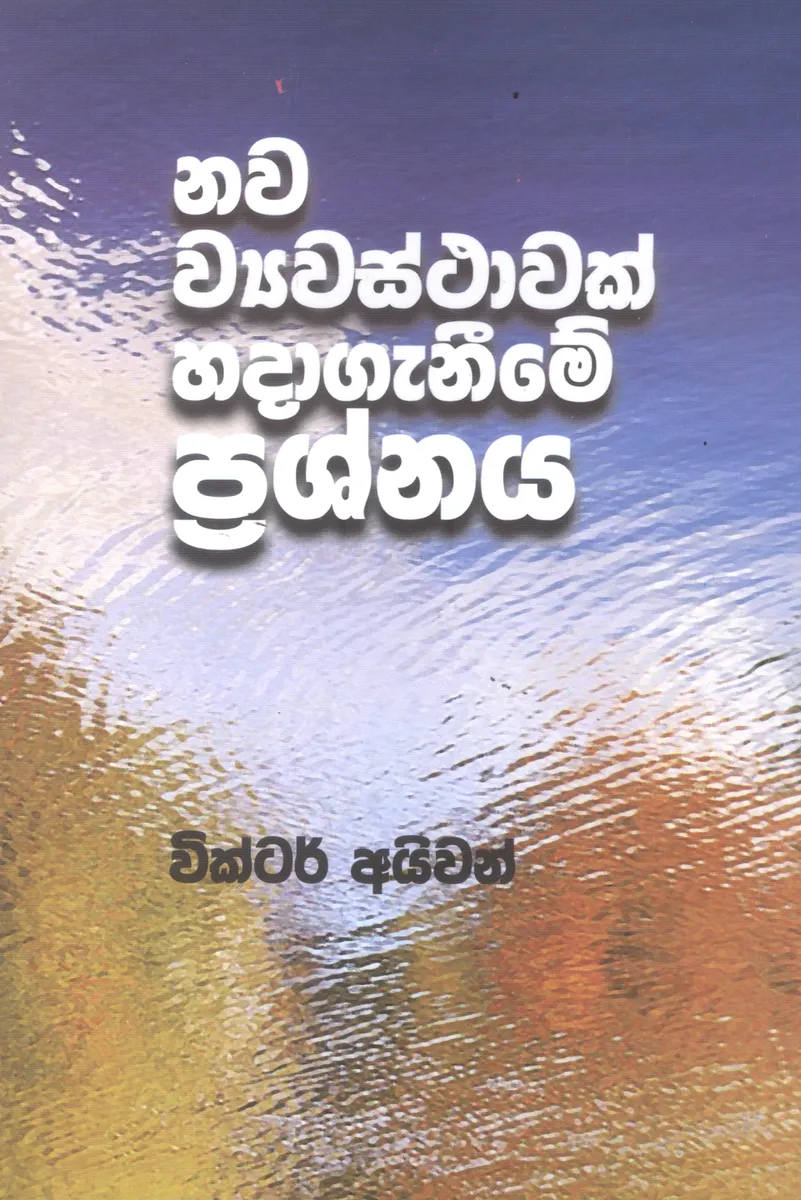
නව ව්යවස්ථාවක් හදාගැනීමේ ප්රශ්නය යනු නව ආණ්ඩුක්රම ව්යවස්ථාවක් පිළිබඳ විවාදය දේශපාලන තලයේ ප්රධාන මාතෘකාවක් වූ අවස්ථාවක, වික්ටර් අයිවන් රාවයට ලියූ දීර්ඝ ලිපි පෙළක නව සංස්කරණයයි. එම ලිපි පෙළ පාඨකයන්ගේ නොමඳ උනන්දුවට හේතු විය. යුරෝපයේ ජාතික රාජ්ය හා ලිඛිත ව්යවස්ථා බිහි වූ ආකාරය, ව්යවස්ථා සම්පාදනයේ පිළිගත් මූලධර්ම, වෙනත් රටවලින් ගත හැකි ආදර්ශ, ශ්රී ලංකාවේ ව්යවස්ථා, සහ ව්යවස්ථාව හා රටේ අර්බුදය අතර සම්බන්ධය එහි විමසා බැලේ.
පරිච්ඡේද හයකින් යුත් කෘතිය 1947 සෝල්බරි ව්යවස්ථාවේ සිට කොල්වින්ගේ 1972 ව්යවස්ථාව හරහා බලය ගල්ගැසූ ජේ.ආර්.ගේ 1978 ව්යවස්ථාව දක්වා ගමන් කරයි. ඉන්පසු ඇමෙරිකාවේ, ඉන්දියාවේ හා ශ්රී ලංකාවේ ව්යවස්ථා සංශෝධන, ව්යවස්ථා සම්පාදනය හා අධිකරණය, සහ ඇමෙරිකාව, ඉන්දියාව, ස්පාඤ්ඤය හා දකුණු අප්රිකාව ඇතුළු නූතන රාජ්යයන්ගේ පරිණාමය සාකච්ඡා වේ. පොදු අපේක්ෂකයා පිළිබඳ අදහස ද එහි විමසෙන අතර, නව ව්යවස්ථාවක් අවශ්ය ඇයි, එය හදාගත යුත්තේ කෙසේද යන ප්රශ්නයෙන් කෘතිය අවසන් වේ. දේශපාලනය ගැන උනන්දු පාඨකයන්ට මෙන්ම ආණ්ඩුක්රම විෂය හදාරන සිසුන්ට ද මෙය ප්රයෝජනවත් වේ.
The Question of Making a New Constitution is a new edition of a long series Victor Ivan wrote for Ravaya at a time when a new constitution had become a central political debate. The series drew strong interest from readers. The book looks at how nation states and written constitutions emerged in Europe, the accepted principles of constitution-making, and models Sri Lanka could learn from other countries. It also examines Sri Lanka’s own constitutions and the link between the constitution and the country’s crisis.
The six chapters run from the 1947 Soulbury constitution, through Colvin R. de Silva’s 1972 constitution, to J.R. Jayewardene’s 1978 constitution, which concentrated power. They go on to constitutional amendment in the United States, India and Sri Lanka, constitution-making and the judiciary, and the evolution of modern states, including the American, Indian, Spanish and South African experiences. A chapter on the idea of a common candidate follows. The book closes by asking why a new constitution is needed and how it should be made. It is written for general readers and for students of constitutional law.