
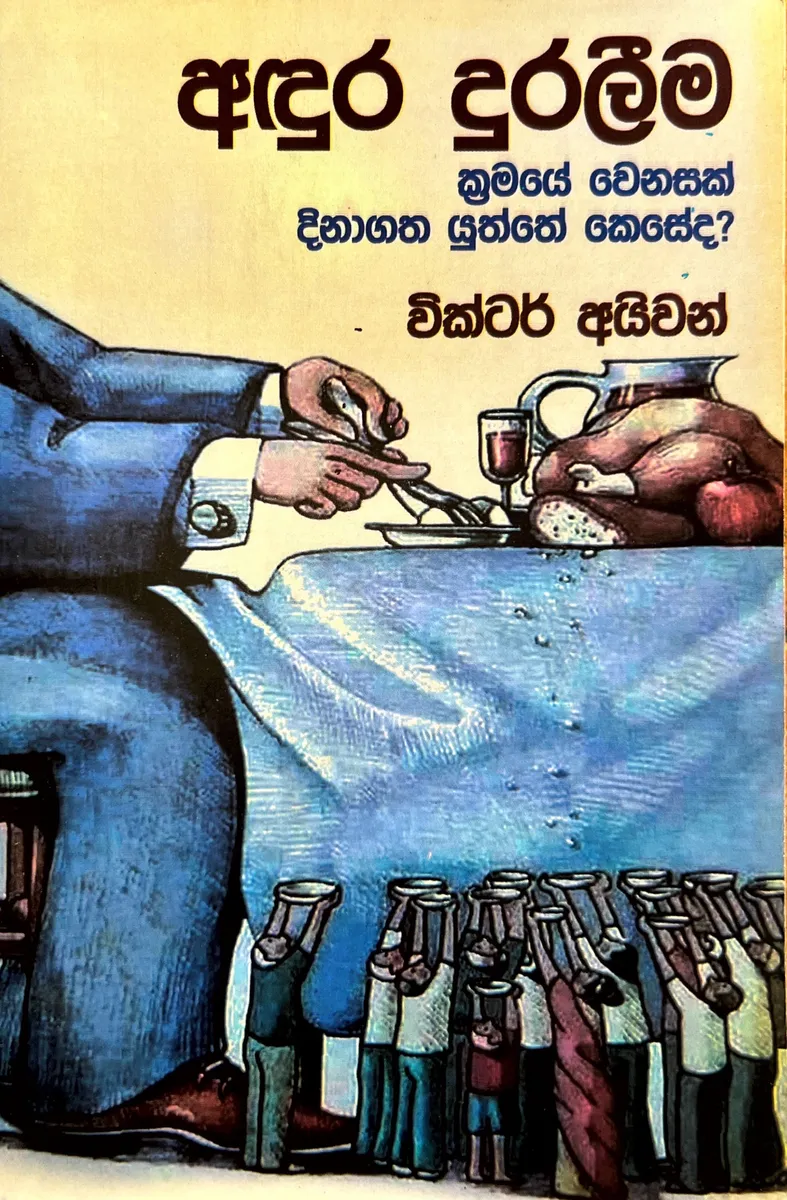
අඳුර දුරලීම යනු ආණ්ඩු වෙනසක් වෙනුවට ක්රමයේ වෙනසක් ඉල්ලා සිටින තැනට ජනගහනයෙන් විශාල පිරිසක්, විශේෂයෙන්ම තරුණ ජනයා, පැමිණ ඇති පසුබිමක ලියූ කෘතියකි. කතුවරයා එය ලංකාවේ සමාජ-දේශපාලන පරිකල්පනයේ වැදගත් දියුණුවක් ලෙස දකී. එහෙත් ක්රමයේ වෙනසක් දිනාගන්නේ කෙසේද යන්න පිළිබඳ දියුණු පරිකල්පනයක් නැති බව ද ඔහු පෙන්වා දෙයි. ක්රමයේ වෙනසක් අපේක්ෂා කරන සුළු පිරිසක් මැතිවරණවලට තරග කොට බලය අල්ලා ගැනීම මගින් එය කළ හැකිය යන ජනප්රිය මතය ඔහු ප්රතික්ෂේප කරයි. එහි හේතුව, ක්රමය සකස් කර ඇත්තේ එවැන්නන්ට බලය ලබාගත හැකි ආකාරයට නොවීමයි. ඒ වෙනුවට, ආයුධ, මිනිස් ඝාතන හා දේපළ විනාශයකින් තොරව, නීතියට අනුකූලව, ප්රජාතන්ත්රවාදීව, මහජනයා තම පරමාධිපත්ය බලය අභ්යාස කරමින් සහභාගි හෙවත් මහජන ව්යවස්ථා සම්පාදනයක් මගින් ක්රමයේ පූර්ණ වෙනසක් ඇති කළ හැකි බව ඔහු පෙන්වා දෙයි.
ලංකාවේ අර්බුදය තේරුම් ගැනීමෙන් ආරම්භ වන කෘතිය, ලැබූ නිදහසේ සීමා, ඉතිහාසය සමඟ සෙල්ලම් කිරීම, අතීත ශ්රී විභූතිය, වර්ගය, ආගම, කුලය, අල්ලස හා දූෂණය ඔස්සේ ව්යවස්ථා සම්පාදනය දක්වා ගමන් කරයි. ඇමුණුම්වල ප්රජාතන්ත්රවාදී ආණ්ඩුක්රම ව්යවස්ථාවක් සම්පාදනය පිළිබඳ විස්තරාත්මක කොටසක් ද ඇතුළත් ය. සමහර පරිච්ඡේද පෙර පළ කළ ලිපි මුළුමනින් සංස්කරණය කළ ඒවා වන අතර, අනෙක්වා මෙම කෘතිය සඳහාම ලියූ ඒවා ය.
Dispelling the Darkness was written as a large part of the public, the young above all, had begun to demand a change of system rather than just a change of government. Victor Ivan saw that as a real advance in Sri Lanka’s political thinking, but he found little clear idea of how such a change could be won. He rejects the popular view that a small group seeking change should simply contest elections and take power, since the system is not built to let such groups win. Instead, he argues, a complete change of system can come through a participatory, people’s constitution-making process. It would be peaceful and lawful, with the public exercising its own sovereignty democratically.
The book begins with understanding Sri Lanka’s crisis. It moves through the limits of the independence the country won, playing games with history, the myth of past glory, race, religion, caste, and bribery and corruption, and on to constitution-making. A long appendix sets out how a democratic constitution should be drafted. Some chapters are earlier articles, thoroughly revised; the rest were written for this book.