
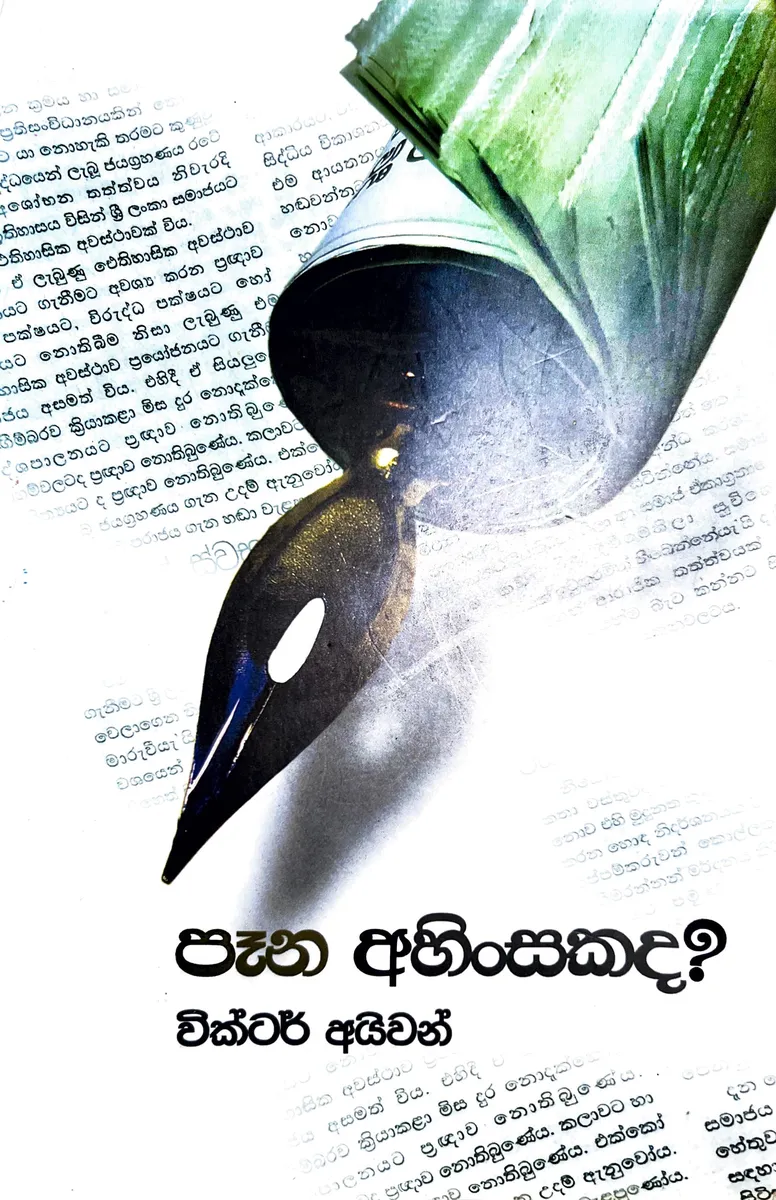
පෑන අහිංසකද? යනු වික්ටර් අයිවන් පුවත්පත් කතුවරයෙකු ලෙස ලැබූ අත්දැකීම් ඇසුරෙන් ලියූ කෘතියකි. එමෙන්ම එය ශ්රී ලංකාවේ ජනමාධ්ය සංස්කෘතිය සහ දේශපාලන සංස්කෘතිය පිළිබඳ විවේචනාත්මක විචාරයක් ද වේ. පෙරවදනෙහි ඔහු පවසන්නේ ජනමාධ්ය ද ඇතුළුව රටේ සමස්ත ආයතන ක්රමයම කුණුවී ඇති බවත්, සමාජ වගකීම පිළිබඳ අවබෝධය නැතිකම, වෘත්තීය අභිමානය නැතිකම සහ බලය අයුතු ලෙස භාවිතය එහි පොදු ලක්ෂණ බවත් ය. ඔහු සිය අරමුණ ලෙස දක්වන්නේ මිහිරි දේවල් නොව අමිහිරි දේවල් කතා කරමින් ජනමාධ්යවේදීන් අතර මෙන්ම සමාජය තුළ ද සංවාදයක් ඇති කිරීම ය.
පරිච්ඡේද හතක් ඇත: ආපසු හැරී බැලීමක්, ගවේෂණාත්මක වාර්තාකරණය, රජුන් තැනීමේ පත්තර කලාව, වඩා වැදගත් නිර්භීතකමද විචක්ෂණකමද, තොරතුරු මූලාශ්ර, නතු නොවී සිටීමේ කලාව, සහ මර්දනය හා නිදහස. ඉන් පසු එන උපග්රන්ථ අටෙහි ලලිත් ඇතුලත්මුදලි සහ ජනාධිපති ප්රේමදාස ඝාතන, කළු ජූලිය, ලසන්ත වික්රමතුංග, සහ පුවත්පත් පැමිණිලි කොමිසම වැනි මාතෘකා සාකච්ඡා වේ. රිචඩ් ද සොයිසා සහ ලසන්ත වික්රමතුංග ඝාතන ද, ලසන්ත සිය මරණයට පෙර ලියූ කතුවැකිය ද එහි විග්රහ කෙරේ. 2009 සැප්තැම්බරයේ පළමුවරට මුද්රණය වූ මෙම කෘතිය ජනසන්නිවේදනය හා ජනමාධ්ය උපාධි හදාරන සිසුන්ගේ අත්පොතක් බවට පත් විය. 2013 ජූලි දෙවන සංශෝධිත මුද්රණයට නව පරිච්ඡේදයක් එක් කළ අතර, රාවයේ ඉතිහාසය 2010 දක්වා දීර්ඝ කෙරිණි. කතුවරයා මෙම කෘතිය පිළිගන්වා ඇත්තේ අසරණයන්ට උදව් කිරීම සිය ජීවිතයේ පරමාර්ථය කරගත් රංජිත් දිසානායක (කළු රංජි) හට ය.
Is the Pen Innocent? is Victor Ivan’s account of journalism, drawn from his years as an editor. It is also a critical study of Sri Lanka’s media culture and political culture. In the preface he argues that the country’s institutions, the media among them, have decayed. The common marks of that decay, he writes, are a lack of social responsibility, a lack of professional pride, and the misuse of power. He says he set out to speak of bitter truths rather than sweet ones, to open a debate among journalists and in society at large.
The seven chapters cover a look back, investigative reporting, king-making journalism, boldness versus prudence, sources, the art of not bowing, and repression and freedom. Eight appendices follow. Their subjects include the killings of Lalith Athulathmudali and President Premadasa, Black July, Lasantha Wickrematunge, and the Press Complaints Commission. The book also examines the murders of Richard de Zoysa and Lasantha Wickrematunge, and Lasantha’s editorial written before his death. First printed in September 2009, it became a set text for university students of mass communication and media. A revised second printing in July 2013 added a new chapter and brought the history of Ravaya up to 2010. The book is dedicated to Ranjith Dissanayake (Kalu Ranji), who made helping the helpless his life’s purpose.