
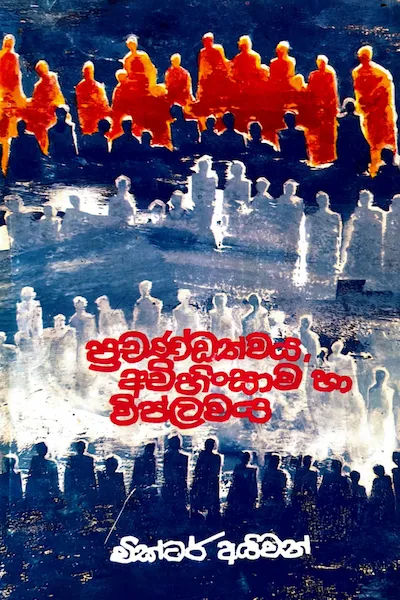
මෙම කෘතියට කතුවරයා විටින් විට ලියූ දේශපාලන ලිපි අතරින් විශේෂයෙන් තෝරාගත් ලිපි 15 ක් ඇතුළත් ය. ශ්රී ලංකා දේශපාලනයේ ගැටලු හා මූලික ප්රවණතා තේරුම් ගැනීමට ඒවා ප්රයෝජනවත් වනු ඇතැයි ඔහු පෙරවදනේ සඳහන් කරයි. 1993 දී ඇස්. ගොඩගේ සහ සහෝදරයෝ විසින් පළ කරන ලදී.
1980 දී ලියූ “ජනතා විමුක්ති පෙරමුණ කුමක් ද….. කොයිබට ද?” ලිපිය, 1982 දී ලියූ ජ.වි.පෙ. ප්රතිපත්ති ප්රකාශනය පිළිබඳ විවේචනය, ශ්රී ලංකාවේ මාක්ස්වාදී ව්යාපාරය සාර්ථක නොවීමට හේතු විග්රහ කරන ලිපි ද, සමාජවාදී ලෝකය බිඳ වැටීමට පෙර ලියූ සමාජවාදයේ මනෝරාජික ස්වරූපය පිළිබඳ ලිපිය ද මෙහි ඇතුළත් ය. මැකියාවෙලියානු මූලධර්ම මත පිහිටා ජේ.ආර්. ජයවර්ධන ඇගයීමට ලක් කරන ලිපිය හා රෝහණ විජේවීර හා ආර්. ප්රේමදාසගේ දේශපාලනය හා සමාජ ආත්මය පිළිබඳ ලිපි ද පොතට ඇතුළත් ය.
ප්රචණ්ඩත්වය, අවිහිංසාව හා විප්ලවය collects fifteen political essays Victor Ivan wrote at different times. He chose them because they help explain the problems and underlying tendencies of Sri Lankan politics. It was first published by S. Godage and Brothers in 1993.
The back cover states the book’s concern: working for a fair and just society is good, but acting without real understanding is harmful and destructive. Sri Lanka’s modern young rebels had shown that clearly.
The earliest essay, “ජනතා විමුක්ති පෙරමුණ කුමක් ද….. කොයිබට ද?”, was written in 1980, as the JVP returned to open politics. It asks why most of those who took part in 1971 had rejected the JVP, while a new generation of young people outside the uprising was drawn to it. Two essays examine one of the basic reasons the Marxist movement failed in Sri Lanka. Another, written in 1982, is a critique of the JVP’s policy statement. Victor Ivan believed it was the only critique of that statement ever written, and still relevant, since the movement’s followers held to it with blind faith.
The essay on the utopian character of socialism was written before the collapse of the socialist world. It argues that a classless society is a utopia: abolishing one class only creates another class society. It drew strong opposition from Marxists at the time, but Victor Ivan notes that later events confirmed it.
Other essays turn to individual leaders. One assesses J.R. Jayewardene by Machiavelli’s principles. Victor Ivan had long wanted to measure Jayewardene, Premadasa, Wijeweera and Prabhakaran against Machiavelli, but managed it only for Jayewardene before work at Ravaya took his time. Further essays examine the politics and personalities of Rohana Wijeweera and Ranasinghe Premadasa, the two figures whose influence he believed had to be understood to understand modern Sri Lankan politics. The book also discusses Lalith Athulathmudali.