
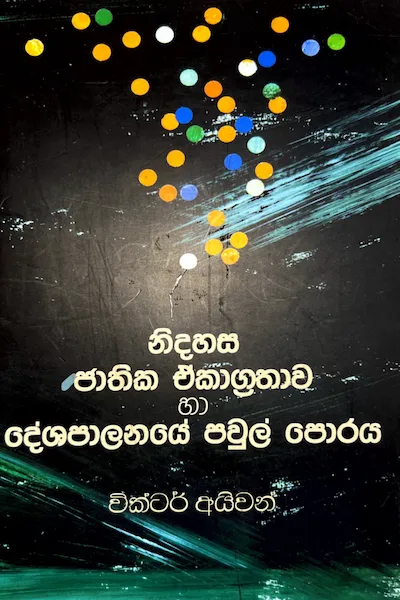
නූතන ශ්රී ලංකාවේ දේශපාලනයේ සැබෑ හැඩතල හඳුනාගැනීමට හේතුවන රචනා තුනක් මෙම කෘතියට ඇතුළත් ය. එය 1999 අප්රේල් මාසයේ මුලින්ම පළ විය.
පළමු රචනය ශ්රී ලංකාවේ නිදහස් ව්යාපාරය පිළිබඳ ඇගයීමකි. ඉන්දියානු නිදහස් ව්යාපාරය වර්ගය, ආගම, භාෂාව හා කුලය මත පැවති බෙදීම් තුනී කරමින් අභිනව ඉන්දියානු ජාතියක් ඇති කිරීමට සමත් වූ විට, ශ්රී ලංකාවේ නිදහස් ව්යාපාරය ජාතික ඒකාග්රතාවක් ඇති කිරීමට අසමත් වූයේ ඇයි ද යන කාරණය එහි පුළුල්ව සලකා බැලේ. ශ්රී ලංකාව මුහුණ දී සිටින අර්බුදයේ ප්රධාන මූලය එය බව කතුවරයා පෙන්වා දෙයි.
දෙවැන්න, නියෝජිත ප්රජාතන්ත්රවාදී දේශපාලනය බණ්ඩාරනායක පවුල හා සේනානායක පවුල් සංගමය අතර බල පොරයක් බවට පත්ව තිබෙන ආකාරය හා එහි ඓතිහාසික විකාශනය විමසා බලයි. මෙම පවුල් කණ්ඩායම් දෙකට අදාළ අප්රකට තොරතුරු රැසක් උපලේඛනවලට ඇතුළත් ය. තුන්වැනි රචනය එස්.ඩබ්ලිව්.ආර්.ඩී. බණ්ඩාරනායක පිළිබඳ දේශපාලන ඇගයීමකි.
නිදහස, ජාතික ඒකාග්රතාව හා දේශපාලනයේ පවුල් පොරය brings together three essays that Victor Ivan believed were essential to understanding the real character of modern Sri Lankan politics. It was first published in April 1999.
The first essay compares the independence movements of India and Sri Lanka. India lost Pakistan, yet its national movement overcame the divisions of race, religion, language and caste in what remained, and built a new Indian nation. Sri Lanka’s independence movement never managed to build a Sri Lankan nation. He argues that this failure is the main root of the country’s crisis and of its recurring bloodshed.
Constitutional reform alone cannot repair it. He criticises the government’s reform package of the time for looking only at the northern Tamil question and ignoring caste, religion, language and other minorities such as the up-country Tamils and the Muslims. What is needed, in his view, is a political movement that people on every side of these divisions can trust. He holds up Gandhi as the model: a leader who never ranked his own race, religion, language or caste above anyone else’s.
The second essay, the longest, traces how the caste hierarchy inherited from the feudal order shaped Sri Lankan politics between 1931 and 1994. It shows how representative democracy turned into a power struggle between the Bandaranaike and Senanayake family groups, and how both sides used caste for power rather than working to end it. Two appendices set out the family trees and connections of the Bandaranaike and Senanayake groups in detail, with much information that had not been published before.
The third essay is a political assessment of S.W.R.D. Bandaranaike, who, Victor Ivan writes, held an almost god-like place in Sri Lankan politics, beyond criticism. The essay sets out to judge his political role on its merits.