
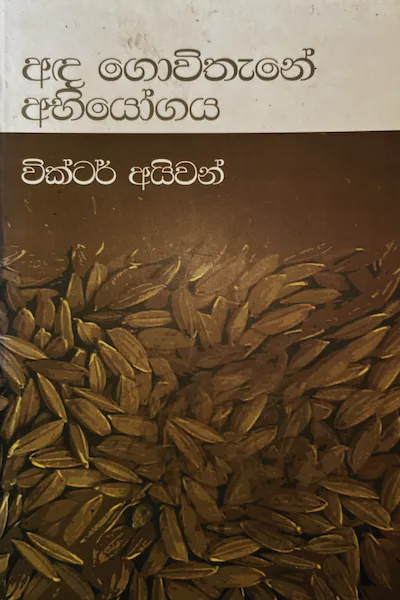
අඳ ගොවිතැනේ අභියෝගය, වී ගොවිතැනේ ක්රියාත්මක වන අඳ ක්රමය පිළිබඳ වික්ටර් අයිවන්ගේ අධ්යයනයයි. 1971 කැරැල්ලෙන් පසු දේශපාලන සිරකරුවෙකු ලෙස බන්ධනාගාරයේ සිටියදී ඔහු මෙය ලිව්වේ ක්ෂේත්ර අධ්යයනයක් ලෙස නොව, එම විෂය පිළිබඳ ප්රකාශිත පොත්පත් හා සමීක්ෂණ වාර්තා ඇසුරෙනි. ඒ සඳහා අවශ්ය පර්යේෂණ ග්රන්ථ ලැබුණේ සෙසු සිරකරුවෙකු වූ සුසිල් සිරිවර්ධනගේ පෞද්ගලික පුස්තකාලයෙනි.
අඳ ක්රමය ග්රාමීය නිෂ්පාදන බලවේග බෙලහීන කරන බව ආර්ථික විද්යාඥයන් අතර පොදු පිළිගැනීමක් තිබුණද, ලංකාවේ ඒ පිළිබඳ අධ්යයනයක් කර නොතිබිණි. ගොවිකටයුතු පර්යේෂණ හා පුහුණු කිරීමේ ආයතනය 1972 දී කළ නියැදි සමීක්ෂණ දත්ත ඇසුරෙන්, විශේෂයෙන් නුවර, හම්බන්තොට හා කොළඹ දිස්ත්රික්කවල ඉඩම් රහිත අඳ ගොවියා කේන්ද්ර කරගෙන, අඳ ක්රමය එම බලවේග කෙසේ හා කවර ප්රමාණයකට බෙලහීන කරන්නේද යන්න මෙහි විමසේ.
අඳ ක්රමයේ මාදිලි හා ව්යාප්තිය, වගා කරන ඉඩම් කට්ටි, බිම් කුලිය, නිෂ්පාදන වියදම, ආදායම හා ණයගැතිකම ද, 1958 කුඹුරු පනත, 1972 ඉඩම් ප්රතිසංස්කරණ පනත හා 1973 කෘෂිකාර්මික ඉඩම් පනත යන ප්රතිකර්මවල සීමා ද, අඳ ක්රමය අහෝසි කිරීමෙන් ලැබෙන ප්රතිලාභ ද පොත සාකච්ඡා කරයි.
පොත මුලින්ම පළ වූයේ 1979 දීය. එහි පසු කවරයේ ඇත්තේ චාල්ස් අබේසේකරගේ 1978 දෙසැම්බර් 11 දින සටහනයි. සමහර විශ්වවිද්යාල පාඨමාලාවලට නිර්දේශිත පොතක් වූ බැවින් රාවය ප්රකාශන 2010 සැප්තැම්බරයේ එය නැවත පළ කළ අතර, 2011 දී දෙවන මුද්රණය නිකුත් විය.
අඳ ගොවිතැනේ අභියෝගය is Victor Ivan’s study of the anda system, the sharecropping arrangement under which a tenant farms another person’s paddy land and hands over a share of the harvest. He wrote it while in prison as a political prisoner after the 1971 insurrection. As he explains in the preface, it is not a field study but is built from published research and survey reports. Many of the books came from the personal library of a fellow prisoner, Susil Siriwardana.
His reason for taking up the subject came from 1971 itself. He saw the insurrection as an uprising of rural youth, and after leaving JVP politics he wanted to understand rural problems rationally. Economists broadly agreed that sharecropping weakened rural production, but no one had yet studied how, or how far, it did so in Sri Lanka.
The book draws on sample surveys of paddy farmers carried out in 1972 by the Agrarian Research and Training Institute. It concentrates on the Kandy, Hambantota and Colombo districts, where tenants made up 40, 50 and 32 per cent of all paddy farmers, and on the landless tenant in particular.
Six chapters cover:
- the forms and spread of the anda system;
- the tenant’s economic position: plot sizes, family labour, land rent, costs of production, income and debt;
- how the system degrades farming methods and impoverishes the producer;
- the limits of the laws meant to address it: the Paddy Lands Act of 1958, the Land Reform Law of 1972 and the Agricultural Lands Law of 1973;
- his proposed solution;
- the benefits of abolishing the system, from loosening the hold of village elites over tenants to higher productivity and income.
The book draws on E.R. Leach’s study of the village of Pul Eliya and on Sarkar and Tambiah’s The Disintegrating Village.
It was first published in 1979, with a note by Charles Abeysekera on the back cover. Ravaya reissued it in September 2010 and reprinted it in 2011. In the preface to that printing, Victor Ivan carries the argument forward. He proposes keeping rice on irrigated land and moving the 31 per cent of paddy land that depends on rain to more profitable crops, as a way to ease rural poverty.