
BIOGRAPHY - VICTOR IVAN
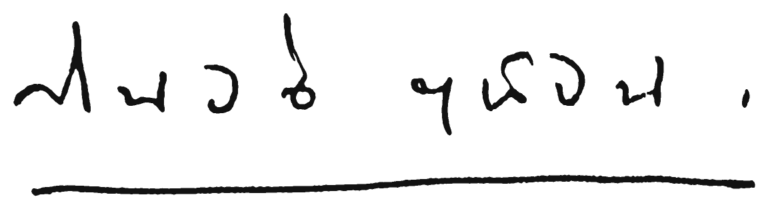
Majuwana Kankanamage Victor Ivan : 26 June 1949 – 19 January 2025
He was sentenced as a rebel in 1971, and the blast that injured him before the rising left his hands barely able to hold a pen. In prison he left Marxism for Gandhi and taught himself to write again. For twenty-five years he edited Ravaya, and for forty he wrote against corruption, impunity and the abuse of power.
Chapter 1 — The Rebel (to 1971)
Victor Ivan was born Majuwana Kankanamage Victor Ivan on 26 June 1949 and schooled at St Aloysius’ College, Galle, and St Anthony’s College, Kandy. He came of age as a generation of rural Sinhala youth, educated but without prospects, turned to revolution. He joined the Janatha Vimukthi Peramuna and was known inside it as Podi Athula.
Months before the April 1971 insurrection he was badly injured in an explosion while making bombs for it. One hand was left numb and the other too damaged to hold a pen. He was arrested before dawn on 4 April 1971, the eve of the rising, and spent the months that followed in police cells, army custody and the prison camps where thousands of young suspects were held.
What was done to him in those sixteen weeks he later wrote down himself, entry by entry, in [a dated account that survives in his own words].
In 1972 the government put the movement’s leaders on trial before the Criminal Justice Commission. Victor Ivan was the seventh suspect in the Main Case. On 5 September 1973, before Chief Justice H.N.G. Fernando and four other judges, he declined to enter the witness box and instead read a statement from the dock, setting out his innocence and the political reasoning behind his choices. He was sentenced to five years.
Chapter 2 — Prison (1971–1977)
Victor Ivan spent close to seven years in custody. He did not leave prison as the man who went in.
At first he believed the rising had failed because its leaders had not understood Marxism well enough, so he set out to study it properly. The deeper he read, the further he moved from it. He came to think that revolutionary parties, however sincere, win power on behalf of the people and then too often rule them. In prison he turned to Gandhi, and accepted non-violence as a method that could win real change without killing. He would later write that Marx and Engels’s historical materialism still shaped how he saw the world.
Early in his imprisonment he could not write at all. Two Buddhist monks held for the insurrection wrote his letters for him, and he never forgot their help. Through long and painful practice he trained his damaged fingers to hold a pen again. His handwriting never recovered its old clarity; for the rest of his life only one person at Ravaya, the typesetter Dhammika, could reliably read it.
Prison was also his university. A long written debate with Gamini Yapa, a Maoist leader of the East Wind group, over whether Sri Lanka was a semi-feudal society, sent him to study village life, paddy farming and land tenure. He wrote a study of the ande share-cropping system from Agrarian Research and Training Institute surveys in five districts, with books lent by Susil Siriwardena. He also wrote April Kerella, later published, and H Wattuwa, whose manuscript was lost.
He was released in 1977 under the pardon granted by the new Jayewardene government.
Chapter 3 — Learning to Write Again (1974–1986)
His first published writing came from a prison cell, under a name that was not his. Between May 1974 and February 1976 articles signed Jayasena Akmeemana appeared in Aththa, Janadina and Janavegaya: proposals for rice self-sufficiency, the farm-debt problem, the agrarian crisis and rural youth, and a series on the state of Sri Lanka’s prisons.
The editor of Aththa, B.A. Siriwardena, had no idea who was sending them. He printed every one prominently, and each gave the prisoner a little more confidence that he could write.
After his release in 1977 he kept writing, first in small left-wing journals such as Young Socialist and then in the mainstream press, including a run of articles in Divaina between 1982 and 1984. By the mid-1980s he had the knowledge, the voice and the readers to start a publication of his own.
Chapter 4 — Ravaya (1986–2012)
Ravaya began in 1986 as a monthly magazine. One of its best-remembered stories revealed radioactive contamination in Nestlé products after the Chernobyl disaster.
When that rising was crushed, he turned the magazine into a tabloid weekly. Through the 1990s Ravaya became the country’s most persistent investigative paper in Sinhala, and a refuge for the persecuted. It campaigned for the return of Chandrika Kumaratunga to politics, then turned on her government when it failed the standards it had promised; he set out that case in Chaura Rajina (The Queen of Deceit). It pursued corruption in the police, the ministries and, at great cost, the judiciary.
He edited Ravaya for twenty-five years, from its first issue to 2012. The paper’s anniversary year set off a public argument about what it had achieved, and he answered in a three-part series on the eight fights of his working life. By mid-2012 he had stepped down from the editor’s chair.
Chapter 5 — The Courts (1996–2004 and after)
The man who had once stood in the dock as a rebel spent much of his editing life back in the courts, this time for what he printed.
Between June 1996 and September 1997 the Attorney General indicted him three times for criminal defamation, over Ravaya reports on the Minister of Fisheries, a senior official and the Inspector General of Police. The cases dragged on for years without a verdict, hanging over him and his paper.
In December 1999 he took his complaint to the United Nations Human Rights Committee. On 27 July 2004 the Committee found that Sri Lanka had violated his right to freedom of expression under Article 19 of the International Covenant on Civil and Political Rights, and his right to be tried without undue delay under Article 14. It told the state to compensate him and to prevent similar violations. Sri Lanka had meanwhile repealed criminal defamation in 2002.
His hardest fight was with the judiciary itself. Ravaya’s reporting on Chief Justice Sarath N. Silva, and his book Nonimi Aragalaya (An Unfinished Struggle), argued that the judiciary had been drawn into a long crisis by its closeness to those in power.
Chapter 6 — Reformer (2012–2025)
Leaving the editor’s chair did not stop the writing. In the essays of 2012 he turned for the first time to his own life — retirement, children, marriage, death — and found that readers answered them more warmly than they had ever answered his politics.
His later books asked why the state he had spent a lifetime exposing kept failing. Demala Abhiyogaya (The Tamil Challenge, 2012) and Jathiye Khedavachakaya (The Tragic Plight of a Nation, 2013) returned to the ethnic war and its roots. The Problem of Making a New Constitution (2014) set out what reform would require. Punarudaye Mawatha (The Path to Renaissance, 2017) laid out his programme for renewal and told, in a few quiet pages, the story of his own change in prison. Lankawe Kunuweema (The Rotting of Sri Lanka, 2018) was his bleakest diagnosis. Several of his books were translated into Tamil, a choice that matched his long argument that the country’s future depended on both peoples.
Victor Ivan died on 19 January 2025, aged 75. He left more than fifty books, some five thousand articles and twenty-five years of a newspaper. This archive is built from that work.